The Humble Revolution: Tracing the Bicycle's Transformative Innovations
The bicycle – a ubiquitous vehicle, a symbol of freedom, sustainable transport, and recreation – seems deceptively simple. Yet, its elegant design is the culmination of centuries of ingenuity, trial, and error. Far from being a singular invention, the bicycle's journey is a fascinating narrative of continuous innovation, where each advancement built upon the last, progressively shaping it into the efficient machine we know today. The question of
When Was the Bicycle Invented? Unraveling Its Long History is less about a single moment and more about a journey of design evolution. This article delves into the pivotal innovations that steered the bicycle from a crude concept to a sophisticated marvel of engineering.
The Dawn of Two Wheels: Early Concepts and Ground-Pushers
Before the concept of a pedal-driven, steerable vehicle took root, the idea of a two-wheeled personal transporter was already intriguing inventors. While a definitive answer to
when was the bicycle invented remains elusive, early iterations challenge the notion of a clear starting point. As early as the second half of the 17th century, rudimentary two-wheeled vehicles propelled by foot were making an appearance. One notable example from 1690 was a French invention, the "draisienne," or "delerifere," which featured a simple wooden beam connecting two wheels. Riders would sit on a cushion atop the beam, using their feet to push off the ground, thereby propelling and steering the machine. Critically, these early designs lacked handlebars, making directional control rudimentary at best. They were essentially running machines, demanding significant physical effort without offering much in the way of mechanical advantage or refined steering. These early attempts, while primitive, laid the groundwork by introducing the fundamental concept of balancing on two wheels in tandem.
The Arrival of Steering: Karl Drais and the Draisine
The first significant leap forward in bicycle design came in 1816, courtesy of German nobleman Baron Karl von Drais. His invention, fittingly named the
draisine (or Laufmaschine – "running machine"), introduced a game-changing feature: a steering mechanism. For the first time, a two-wheeled vehicle incorporated a handlebar that pivoted on the frame, allowing the rider to turn the front wheel. This innovation was revolutionary. Riders still propelled themselves by pushing their feet against the ground, much like their predecessors, but now they could guide their direction with much greater precision and ease.
The draisine sparked a temporary craze, particularly in England, where variations were known as "hobby horses" or "dandy horses." These English models often featured lighter frames, adjustable saddles, and even elbow rests for improved rider comfort. One such dandy horse was patented in the United States in 1819. While its popularity was fleeting due to practical limitations – rough roads made for a jarring ride, and elegant attire wasn't conducive to ground-pushing – Drais's invention irrevocably established the essential principle of steering a two-wheeled vehicle, a cornerstone of all future bicycle designs. It proved that balancing on two wheels could be combined with directional control, setting the stage for the next monumental step: self-propulsion without foot-to-ground contact.
The Pedal Revolution: From Boneshaker to High-Wheeler
The true "pedal revolution" began in France around 1855, with the advent of the crank-driven velocipede. This machine marked the birth of the direct precursor to the modern bicycle. French inventors developed a system where pedals were attached directly to the hub of the front wheel, allowing riders to propel the vehicle forward using their feet in a continuous rotary motion, without ever touching the ground.
These early pedal-driven machines were far from comfortable. Constructed primarily from wood for both frame and wheels, and fitted with solid iron tires, they earned the notorious nickname "boneshaker." Riding over the cobblestone streets of 19th-century Europe was a jarring experience, to say the least. Despite the discomfort, the boneshaker proved the viability of pedal power. By 1869, further refinements in England introduced solid rubber tires mounted on steel rims, and it was a machine incorporating these features that was first patented under the modern name "bicycle."
The pursuit of speed and efficiency then led to the development of the "ordinary" or "high wheel bicycle." While several inventors contributed, James Starley is credited in 1886 with producing a machine incorporating many of its defining features. The high-wheeler was characterized by a massive front wheel, often three times the diameter of the small rear wheel, with the pedals still directly attached to the front hub. This design maximized the distance covered with each pedal revolution, making it fast. However, its height, high center of gravity, and direct drive also made it inherently dangerous, leading to frequent and dramatic falls (known as "headers"). Mounting and dismounting required considerable skill, limiting its appeal to a specific, adventurous demographic. The exciting, yet perilous, evolution of these designs is comprehensively covered in
From Boneshaker to Safety Bike: The Bicycle's Inventive Evolution.
The Safety Bicycle and Modern Advancements
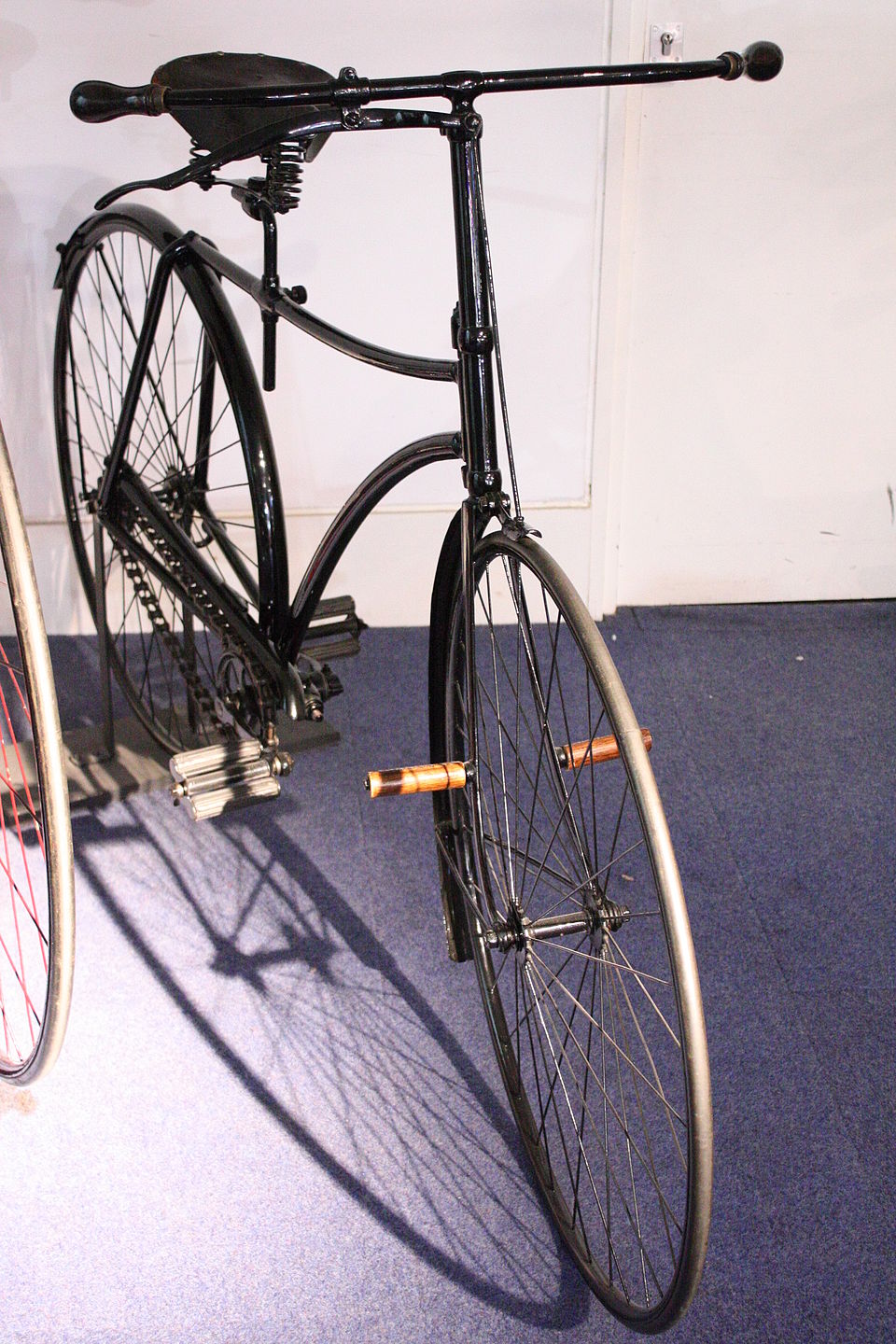
The inherent dangers of the high-wheeler spurred inventors to seek a safer, more accessible design. Around 1880, the "safety bicycle" emerged, revolutionizing personal transport and making cycling available to a much wider audience. The core innovations of the safety bike were:
*
Equal-Sized Wheels: Both wheels were of nearly equal size, significantly lowering the rider's center of gravity and making the bike far more stable and easier to balance.
*
Chain Drive: The pedals were no longer directly attached to the drive wheel. Instead, they powered a sprocket, which in turn drove the rear wheel via a chain. This crucial innovation allowed for gear reduction, meaning the rider could pedal at a comfortable cadence while achieving respectable speeds, and also allowed for the use of smaller, safer wheels.
The introduction of the safety bicycle coincided with, and benefited from, several other monumental innovations that collectively propelled the bicycle to its "highest point of development":
*
Ball Bearings: Integrating ball bearings into hubs, pedals, and bottom brackets dramatically reduced friction, making the bicycle much smoother, more efficient, and easier to pedal. This innovation is still fundamental to almost every rotating part on a modern bike.
*
Pneumatic Tires: Perhaps the single most impactful comfort improvement, John Boyd Dunlop's invention of the pneumatic tire in 1888 transformed the riding experience. Air-filled rubber tires absorbed shocks from uneven surfaces, provided superior grip, and dramatically reduced the "boneshaker" effect, making cycling enjoyable on varied terrains.
*
Weldless Steel Tubing: Advancements in metallurgy and manufacturing led to stronger, lighter, and more durable frames constructed from weldless steel tubing. This allowed for more refined frame geometries and greater reliability.
*
Spring Seats: While pneumatic tires improved overall ride comfort, spring-loaded seats offered an additional layer of cushioning, further enhancing the rider's experience.
These innovations, coming together in the late 19th century, created a vehicle that was safe, comfortable, efficient, and accessible. The safety bicycle quickly eclipsed its high-wheeled predecessor and formed the fundamental blueprint that almost all bicycles follow to this day.
Beyond the Basics: Continuous Refinement
While the safety bicycle established the core design, innovation didn't stop there. The 20th and 21st centuries have seen continuous refinement:
*
Derailleur Gears: Introduced in the early 20th century, multi-speed gear systems transformed cycling, allowing riders to adapt to varying terrains with ease.
*
Improved Braking Systems: From simple caliper brakes to powerful disc brakes, braking technology has evolved to provide greater safety and control.
*
Frame Materials: Beyond steel, materials like aluminum, titanium, and carbon fiber have significantly reduced bike weight and improved stiffness and ride quality.
*
Suspension Systems: For mountain biking and enhanced comfort, front and full suspension systems have opened up new possibilities for off-road cycling.
*
Electric Assist: E-bikes, with their integrated motors and batteries, represent a modern revolution, making cycling accessible to even more people and for longer distances.
Practical Insights from a History of Innovation
Understanding the bicycle's journey offers more than just historical trivia; it provides valuable insights for cyclists today.
*
Appreciate Modern Comfort: Next time you glide over a rough patch of road, remember the "boneshaker" and silently thank Dunlop's pneumatic tire. Modern comfort is a direct result of centuries of refinement.
*
The Importance of Gearing: The chain drive and subsequent derailleur systems are engineering masterpieces. For practical advice, consider your terrain: more gears mean more versatility for hills and varying speeds.
*
Safety First: The "safety" bicycle's core design – low center of gravity, equal wheels, effective brakes – remains paramount. Always prioritize a bike that feels stable and offers reliable stopping power.
*
Maintenance Matters: From ball bearings to chains and gears, these critical innovations require regular maintenance to ensure smooth, efficient, and safe operation. A well-maintained bicycle is a joy to ride.
Conclusion
The bicycle's journey is a powerful testament to human ingenuity and persistent problem-solving. From the foot-propelled wooden beams of the 17th century to the intricate, lightweight machines of today, each key innovation, whether it was the steering mechanism, the pedal drive, the chain and gear system, or the pneumatic tire, has progressively shaped its design. While the precise answer to "When was the bicycle invented?" remains a tapestry woven with many threads, the narrative of its design evolution is clear: a continuous pursuit of efficiency, comfort, and safety. This enduring spirit of innovation ensures that the bicycle will continue to evolve, carrying us into a more sustainable and active future.